

C-section recovery essentials, scar healing, core strengthening, and pelvic floor physical therapy after birth.
You had major abdominal surgery. And now you are supposed to recover while feeding a newborn, changing diapers, carrying a car seat, and functioning on very little sleep.
Your incision can be healed while the rest of your body is still recovering. At CHIRO FOR MOMS + PELVIC FLOOR FOR MOMS in Wayzata, we support postpartum recovery with hands-on treatment, pelvic floor therapy, chiropractic care, and progressive strengthening. We also gathered firsthand recovery advice from a mom who has experienced a C-section.
What You Really Need After a C-Section
Every product below comes from our C-Section Recovery list on Amazon, picked by our team for comfort, incision protection, and scar care. See the complete list.
Comfortable underwear and pads
Yes, you can still have postpartum bleeding after a C-section. Choose soft, high-rise underwear that does not rub your incision. For the first days, Frida Mom disposable postpartum underwear is easy to change. Once you are home, a soft high-waisted pair and absorbent pads make the early weeks more comfortable.


Heat, cold, and temporary support
One practical tip is to ask about disposable heat packs at the hospital. Reusable hot and cold packs can also help with comfort. Avoid placing either directly on a healing incision. An abdominal binder may provide temporary comfort with walking, coughing, and getting out of bed, but it is not a replacement for gradually rebuilding muscle function.
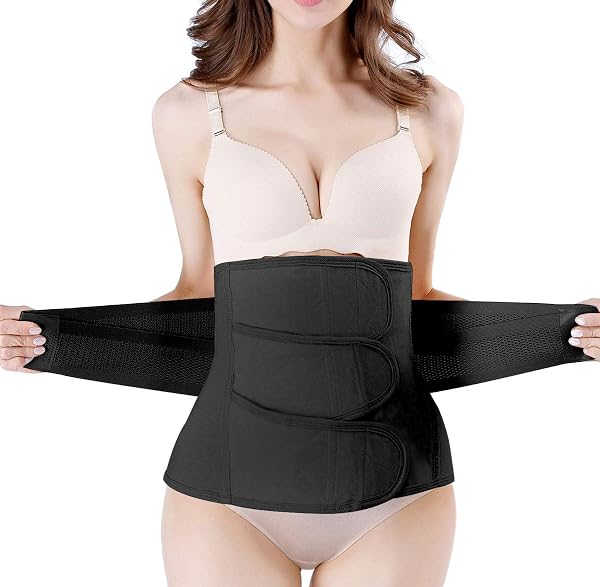
Compression socks, pillows, and help at home
Compression socks may help with swelling if recommended by your medical team. New one-sided calf swelling, pain, or redness needs prompt assessment. Use plenty of pillows to support feeding positions. Prepare easy meals and let your partner or support person handle lifting and extra trips out of bed. A grabber tool saves you from bending to the floor dozens of times a day. For getting up, roll onto your side, lower your legs, and push up with your arms as you exhale.

If feeding is difficult, our lactation team can help with latch, positioning, and milk transfer.
Scar care once your incision has healed
Once your incision is fully closed and your provider has cleared it, silicone strips and gentle scar massage with a balm can help the tissue stay soft and mobile. Never apply scar products over an open, weeping, or irritated incision.


C-Section Recovery Must Haves
Recovery garments, scar care, bathroom helpers, and the book we recommend, all in one place.
View the complete Amazon listAs an Amazon Associate, CHIRO FOR MOMS + PELVIC FLOOR FOR MOMS earns from qualifying purchases. Product images are from Amazon; packaging may change. Products are suggestions, not medical advice. Ask your provider before using scar products or support garments.
Why Pelvic Floor Therapy Matters After a C-Section

“But I did not deliver vaginally. Why would I need pelvic floor therapy?” Because your pelvic floor worked throughout pregnancy, and your diaphragm, abdominal wall, hips, and pelvic floor still need to coordinate after delivery. Moms may experience scar sensitivity, abdominal tightness, core weakness, leaking, constipation, pelvic pressure, back pain, or difficulty returning to exercise. You do not need a major symptom to benefit from a personalized recovery assessment.
Our Three-Visit C-Section Recovery Approach
Our visits are individualized. Three appointments are a helpful framework, not a package or a requirement. Some moms need fewer; others benefit from more.
Visit 1: Assess + Reconnect
Early postpartum care begins with listening to your symptoms and checking how your abdominal wall, breathing, hips, and pelvic floor are working together. We assess scar mobility when the incision is sufficiently healed, and begin with comfortable breathing, gentle tissue work, and core coordination. Internal pelvic floor assessment is optional. Scar-directed manual treatment and dry needling are considered only when appropriate for tissue healing.
Dr. Jenn assesses how the abdominal wall, hips, and pelvis are moving together early in recovery.
Visit 2: Release + Strengthen
As healing progresses, we may use gentle abdominal soft tissue release and guided hip or leg movement to address areas that feel restricted. Dr. Jenn helps patients find a comfortable range of motion, then gradually layers in pelvic floor coordination and hip and core control. The goal is not to push through pain, but to build movement confidence.
Dr. Jenn uses gentle silicone cupping to release soft tissue around a fully healed C-section scar.
Once the incision is fully healed, gentle silicone cupping may be one option for improving soft tissue mobility around the scar. In this clinic demonstration, Dr. Jenn uses a silicone cup to gently lift and release the abdominal tissue around a healed C-section scar.
Cupping is never applied over an open or irritated incision, scar-focused treatment is considered only when the incision has fully healed, and it is not needed for everyone.
Dr. Jenn supports hip and leg movement to find a comfortable range of motion.
Visit 3: Restore + Progress
Later visits connect recovery to the movements you use every day: lifting your baby, carrying, getting off the floor, and eventually returning to exercise. Depending on your needs, this may include supported bridges, reformer-based exercises, progressive core and hip strengthening, and movement retraining. Gentle cupping around a fully healed C-section scar is an optional hands-on technique, not a requirement.
Reformer-based exercises progressively build core and hip strength as recovery advances.
Functional strength for real life: We build toward comfortable lifting, holding, and carrying your baby. These tasks require coordination of your breath, abdominal wall, pelvic floor, and hips. Your therapist will tailor the exercises to your stage of recovery.
Dr. Jenn demonstrates squats while holding a baby, building the strength moms need for lifting and carrying every day.
You do not have to wait until six weeks for every kind of support. Early visits can address breathing, comfortable positioning, gentle movement, and back or pelvic discomfort without directly treating an unhealed incision.
Pelvic Mobilization: How Chiropractic Care Fits Into C-Section Recovery
After pregnancy and abdominal surgery, it's common to move differently as you protect your incision, carry your baby, and adjust to feeding positions. That can leave your low back, hips, and pelvis feeling stiff or uncomfortable.
At CHIRO FOR MOMS + PELVIC FLOOR FOR MOMS, chiropractic care may include gentle pelvic and spinal mobilization, hands-on soft tissue treatment, and practical movement guidance to help improve comfortable movement. We work alongside pelvic floor physical therapy so that mobility, breathing, scar recovery, and strengthening are addressed together.
Care is individualized to your stage of healing and symptoms. Chiropractic mobilization does not replace incision healing or pelvic floor rehabilitation, but it can be another way to address back and pelvic discomfort as you recover.

Hands-on pelvic and spinal treatment can complement pelvic floor rehabilitation.
A Real C-Section Recovery Story: A Mama of Twins
After a scheduled C-section with twins, one patient experienced postpartum bleeding, difficulty emptying her bladder, and feeding challenges. Around six weeks postpartum, abdominal tightness, scar sensitivity, hip pain, and upper back tension made everyday movement uncomfortable. We began with scar desensitization, abdominal wall care, deep core coordination, and chiropractic care for her hips and upper back.
As she progressed, we worked on scar mobility, breathing, hip and core strength, and pelvic floor relaxation. Urinary burning resolved after treatment for a UTI; ongoing bladder symptoms still required medical follow-up. By approximately 14–16 weeks postpartum, we progressed exercises toward her goal of returning to volleyball. She has since returned to work and volleyball, with less scar sensitivity and pain trending down, while continuing to address remaining symptoms.
Details have been generalized for privacy. Individual outcomes vary.
Three Simple Ways to Reconnect With Your Core
1. Diaphragmatic breathing
Gentle breathing can help reconnect the diaphragm and pelvic floor. Watch: Diaphragmatic breathing for postpartum core and pelvic floor coordination
Seated breathing with hands on the ribs and belly to reconnect the diaphragm, deep core, and pelvic floor.
2. Comfortable pelvic mobility
Start with small, comfortable movements rather than forcing a stretch. Gentle pelvic and hip motion can help you notice where your body feels guarded and gradually restore confidence moving after surgery.
Small, comfortable pelvic movements to regain confidence and coordination as recovery progresses.
3. Progressive deep core activation
Strength work can begin with gentle breath-and-core coordination, then progress toward supported marching, bridges, and functional lifting as tolerated. A pelvic floor physical therapist can help you find the right level and adjust for symptoms.

Explore our C-Section Recovery Exercise Playlist for more ideas.
It Is Never Too Late to Address C-Section Recovery
Whether you are six weeks, six months, or years postpartum, scar tightness, pelvic discomfort, leaking, and difficulty returning to exercise are worth addressing. At CHIRO FOR MOMS + PELVIC FLOOR FOR MOMS in Wayzata, Minnesota, our chiropractors and pelvic floor physical therapists work together to create a plan around your goals. No long-term treatment commitment, just individualized care.
Ready to feel more comfortable and confident? Schedule a pelvic floor physical therapy appointment with our team.
Educational information only. Seek medical care for fever, increasing incision redness or drainage, heavy bleeding, severe pain, or new or worsening urinary symptoms.